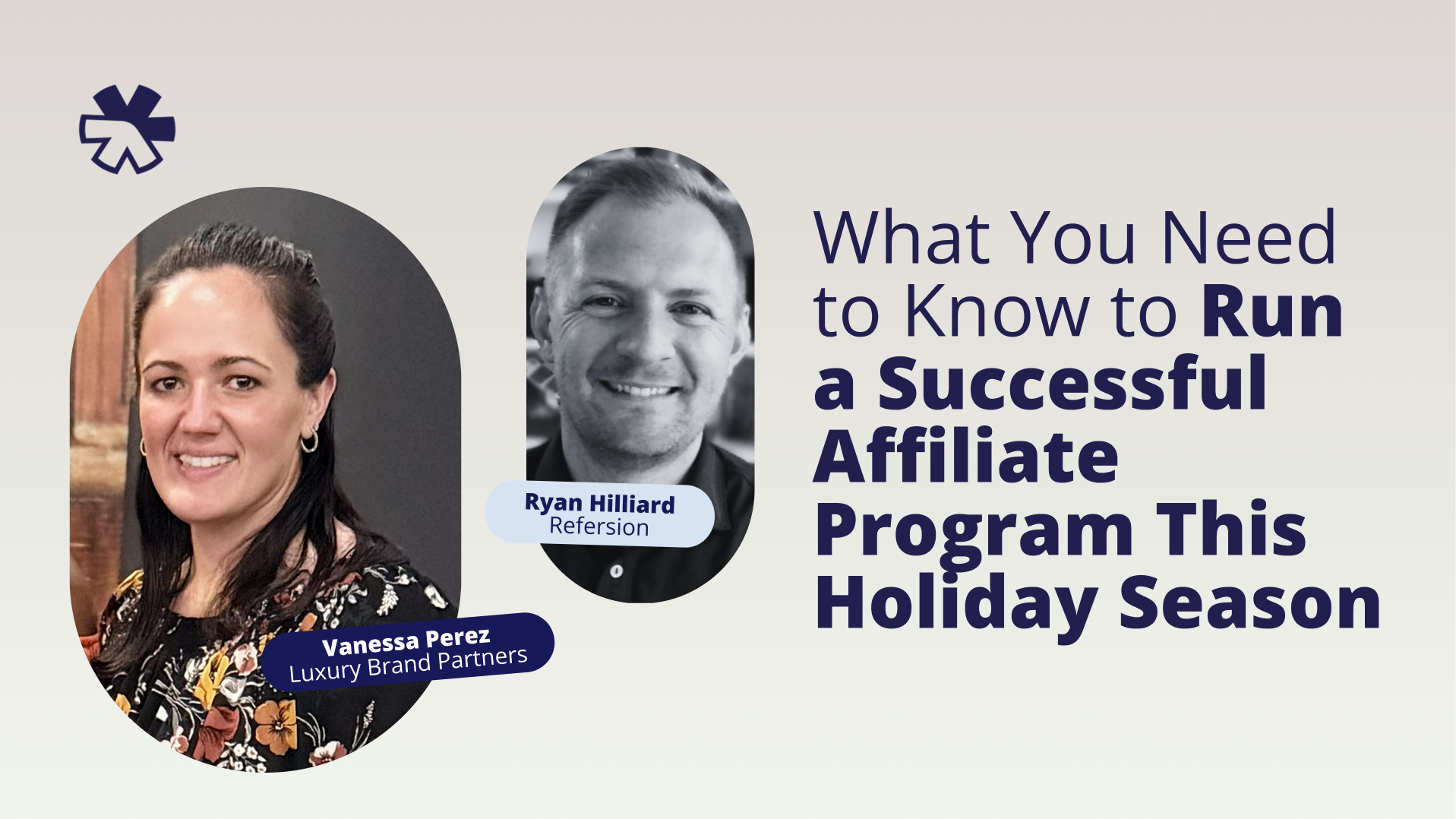
With the holiday season fast approaching, e-commerce merchants and digital marketers are bracing for the most competitive quarter of the year. To uncover the strategies that truly drive performance during this chaotic season, Ryan Hilliard, CEO of Refersion, sat down with Vanessa Perez, Director of Business Systems at Luxury Brand Partners.
Vanessa oversees system integrations and affiliate marketing across a powerhouse portfolio of beauty, haircare, and makeup brands, including IGK, In Common, One Size, and R+Co. What makes Vanessa’s perspective unique is how R+Co successfully bridged the gap between traditional wholesale and digital direct-to-consumer (DTC). Originally launched during COVID-19 to keep shuttered salons afloat, their affiliate program empowers wholesale salon partners to act as digital ambassadors.
Whether you are managing a pure DTC brand or balancing a complex hybrid model, Vanessa shared her playbook for finding the right partners, unlocking holiday revenue, and scaling your program efficiently.
1. Vetting for True “Brand Fit” Over Vanity Metrics
When launching an affiliate program, it is tempting to chase creators with the largest follower counts. However, Vanessa notes that early trial and error taught them that unchecked reach can backfire [09:50]. If an influencer doesn’t understand your space, they may use the wrong terminology, mismanage expectations, and ultimately taint your brand identity [10:32].
Instead, prioritize aesthetic alignment and shared mission [07:52]:
- Align Social Aesthetics: Ensure the visual style and tone of a creator’s channel mirror how your brand wants to be perceived in the market [07:59].
- Cross-Pollinate Audiences: Think outside your immediate vertical. For example, R+Co successfully partners with TikTok fragrance influencers [08:35]. While they don’t sell perfume, the intersection of hair care scents and fragrance perfectly marries a creator’s existing audience with the brand’s product value [08:47].
2. Driving Partner Value through Education
An affiliate program shouldn’t be a “set it and forget it” database. To maximize revenue without exponentially expanding your workload, you must invest in the growth of the individual affiliates you already have [11:38].
Luxury Brand Partners treats their affiliates as professional partners by offering monthly newsletters, tactical tips, and structured education sessions [12:03].
- Coaching vs. Scripting: Don’t hand creators a rigid script. Instead, educate them on why certain messaging works so they can adapt it to their unique voice [13:12].
- Grow Together: Cultivating smaller, up-and-coming micro-influencers builds a deeper emotional connection [13:43]. Because you actively contributed to their professional growth as digital marketers, they remain loyal long-term allies [14:06].
3. Measuring the “Halo Effect” & Securing Leadership Buy-In
Direct conversion tracking is vital, but focusing strictly on immediate affiliate revenue numbers ignores the massive offline value these programs create [15:54].
Because R+Co runs its affiliate program through wholesale salon networks, they started noticing a powerful hybrid feedback loop [16:25]. When digital affiliates raise brand awareness online, it drives localized foot traffic back into physical retail spaces and salons [16:33]. This demand triggers an influx of wholesale reorders, and it even draws in entirely new business accounts [16:40].
“We actually see inquiries come in from salons that want to carry our brand… they note that clients reached out on Instagram asking for us. It builds a direct correlation from social exposure.” — Vanessa Perez [18:11]
When pitching the value of affiliate marketing to company executives, frame it as an incredibly cost-effective, scalable marketing force [19:35]. Unlike hiring a massive internal team of salaried brand marketers, an affiliate network expands your global digital footprint dynamically without inflating upfront operational overhead [19:44].
4. High-Octane Q4 Strategies: Early Access and Exclusive Incentives
Q4 feeds are incredibly crowded, and creators are constantly bombarded by brands vying for promotion space. To cut through the holiday noise, Vanessa relies on a couple of creative, tactical moves:
- The One-Week Embargo: Give your affiliates access to your Cyber Week deals one week before they go live to the general public [21:05]. For instance, if your public deals drop on November 20th, let affiliates promote them on November 15th [21:11]. This gives them a clear window to capture conversions when their audiences aren’t yet desensitized by holiday promo spam, while simultaneously helping your warehouse balance out peak fulfillment surges [21:31].
- Exclusive Back-Pocket Perks: Provide your affiliates with an extra incentive that isn’t publicly listed on your main store site [21:50]. Offering a unique gift with purchase (GWP) or sitewide free shipping specifically through an affiliate link establishes clear value for the consumer and protects the integrity of affiliate attribution [21:58].
5. Looking Ahead: AI Automation and Multi-Level Growth
When looking toward the future of scaling affiliate marketing, Vanessa highlights two rapidly evolving areas:
- Algorithmic Automation: Historically, finding and vetting creators has been an entirely manual process. Emerging features on platforms like TikTok analyze engagement, user demographics, and content styles automatically, cutting out hours of manual prospecting [28:36].
- Multi-Level Affiliate Networks: Encourage your highest-performing foundational affiliates to recruit other creators into your program [29:17]. By allowing top performers to share in the success of the networks they bring in, you multiply your workforce with high-quality, trusted individuals who are already pre-aligned with your brand vision [29:31].
6. Rapid-Fire Q&A: Overcoming Operational Friction
During a fast-paced audience Q&A session, Vanessa tackled some of the most frustrating pain points affiliate managers face daily:
- Commissions vs. Flat Fees: When high-quality creators push back on affiliate setups in favor of fixed rate cards, shift the narrative toward unlimited upside [31:03]. A fixed fee has a hard cap, whereas a high-performing organic commission partnership gives them ongoing, uncapped earning potential [32:10]. Additionally, keeping them continuously stocked with premium, highly sought-after products helps sweeten the deal [38:19].
- Identifying Fraud and “Scammy” Accounts: If a middle-tier affiliate is pulling in a massive wave of conversions that seems disproportionate to their social footprint, investigate further [36:20]. Vanessa recalled a scenario where a partner was running unauthorized Google Paid Ads embedded with their personal affiliate link [36:54]. Work closely with platform support teams (like Refersion) to auditing conversion sources and maintain visibility [37:05].
- Vetting Inbound Cold Requests: Don’t auto-decline inbound affiliate applicants just because they have no historical interaction with your page [39:06]. Start a dialogue to learn what brought them to your brand—they might just turn out to be your next top-tier advocate [39:26].
- Pruning Dead Weight: If your database is full of historical accounts that do absolutely nothing, schedule a clean-up every couple of years [43:08]. However, before hitting the delete button, send out a final re-engagement email or a quick survey to see if they can be drawn back into the fold [43:13]. Clean data ensures your metric tracking remains perfectly accurate [43:41].
Key Takeaways for Marketers
Building a lucrative holiday strategy is rooted in planning early, giving your creators unique leverage, and providing the tools they need to market your products efficiently. When you treat your affiliates as true extensions of your business, your brand gains an unstoppable competitive edge.
To listen to the complete masterclass and gather more expert strategies, watch the full live recording on YouTube: Ask the Expert: What You Need to Know to Run a Successful Affiliate Program This Holiday Season.