
A CreatorCommerce contribution for the Refersion.
Your Refersion program already does the hard part well: it recruits affiliates, tracks every click and conversion, manages commissions, and pays creators reliably. But there’s one place even a great affiliate program leaks revenue — the page the link points to. When a creator’s audience clicks through and lands on a generic homepage, the trust that drove the click evaporates. A creator storefront fixes that. It turns the destination of your Refersion affiliate links into a co-branded, on-brand shopping experience — and across the brands running them, that single change lifts conversion rates by 30–214%.
This guide explains what a creator storefront is, how it works, the benefits DTC brands see, and how it layers cleanly on top of the affiliate program you already run in Refersion.
What is a creator storefront?
A creator storefront is a personalized commerce page — a landing page, product page, or mini-shop — that lives on your own domain and is co-branded around a specific creator. The shopper sees your products, but the experience is curated, narrated, and visually anchored to the creator who sent them there.
A typical creator storefront includes:
- The creator’s name and photo
- A hand-picked selection of products the creator recommends
- An auto-applied discount unique to that creator (no codes for shoppers to remember)
- Creator-driven copy (“My favorites,” “What I take daily,” “My closet”)
- Your checkout, on your own domain
- Per-creator attribution that doesn’t depend on UTM parameters or cookies
The defining feature is continuity: when a shopper clicks a creator’s Refersion link, they land on a page that visually continues the trust signal that drove the click. It’s your store — personalized around someone the shopper already trusts. (CreatorCommerce is the Shopify-native infrastructure that powers these storefronts for brands like Cozy Earth, Healf, Crocs, and Electro.)
How does a creator storefront work?
A modern creator storefront has four operational components, and they sit directly downstream of your Refersion program:
- A unique URL per creator — for example, yourbrand.com/shop/jane-creator. This becomes the creator’s hub, and the link your Refersion affiliate shares.
- A discount layer — the creator’s offer, applied automatically when the storefront is visited.
- An attribution layer — a creator-specific identifier is stored at click time and persists through checkout, surviving device changes and cookie loss. This complements Refersion’s order-level tracking with full on-site context.
- A content layer — the creator’s photo, name, curated products, and copy — pulled automatically from the affiliate platform so each creator’s page builds itself.
Refersion manages the program — the affiliates, the links, the commissions, the payouts. The storefront simply makes the page those links point to convert. The affiliate link gets the click; the storefront closes the sale.
Why the destination matters as much as the link

The headline result across CreatorCommerce customers: creator storefronts drive 30–214% higher conversion rates than sending the same traffic to a generic page, plus 67–78% higher average order value.
The mechanism is straightforward. When a shopper clicks an affiliate link to a generic landing page or homepage, the experience changes mid-funnel. The creator’s voice disappears, and the shopper has to rebuild context — what was the creator recommending? Why did I click? Many drop off in that transition. A creator storefront collapses it: the creator’s photo, voice, curation, and recommendation are still present at the buying moment, on a page that feels like a continuation of the content that drove the click.
This isn’t a knock on affiliate links — they’re the on-ramp, and Refersion tracks them precisely. It’s about giving that traffic a destination worth converting on.
Seven benefits of creator storefronts for DTC brands
The benefits compound. Across CreatorCommerce customers, creator storefronts solve several problems at once:
- Higher conversion rate. Cozy Earth saw a 214% average CVR increase versus standard affiliate links. Healf saw 40.8% versus homepage traffic. Buttah Skin saw 30% with co-branded pages.
- Higher average order value. Cozy Earth saw 67.37% higher AOV; Buttah Skin saw 78% — both alongside their CVR lifts, a rare win on both axes.
- Lower customer acquisition cost. Storefronts replace paid impressions with borrowed trust. Cozy Earth’s 600+ creator partnerships absorbed acquisition demand that would otherwise require significant paid spend.
- Repeatable program infrastructure. Healf scaled to 1,700+ shoppable creator storefronts on a single template — the marginal cost of adding the next creator is near zero.
- A UGC content flywheel. Healf logged 1,200+ pieces of creator-submitted content as a byproduct of the program — content that earns its own search traffic.
- Clean per-creator attribution. Each storefront is its own URL with its own attribution, complementing the commission data already flowing through Refersion.
- A primary revenue channel, not a side bet. Electro grew their creator program into 81% of total e-commerce revenue, because the program scales as repeatable infrastructure.
Real creator storefront examples
- Cozy Earth — 600+ co-branded creator storefronts, each with the creator’s photo, hand-picked products, and an auto-applied discount. Replaced a leaky promo-code program. Result: 214% CVR lift, 67.37% AOV lift, and a 63.41% month-over-month increase in link sharing in the first four months.
- Healf — 1,700+ shoppable creator storefronts, each combining a wellness practitioner’s curation with Healf’s catalog (“My Sleep Stack,” “What I Take Daily”). Result: 40.8% CVR lift versus homepage traffic.
- Crocs — a limited-edition Kai Cenat creator storefront drove 350,000 sessions in a single drop, with micro-influencers running their own personalized Crocs storefronts.
- Buttah Skin — co-branded creator pages drove the highest combined lift in the customer set: 30% CVR and 78% AOV.
- Electro — built creator storefronts into 81% of total e-commerce revenue, treating creator-led commerce as the primary channel.
What makes a high-converting creator storefront?
Across these brands, the storefronts that convert share five elements:
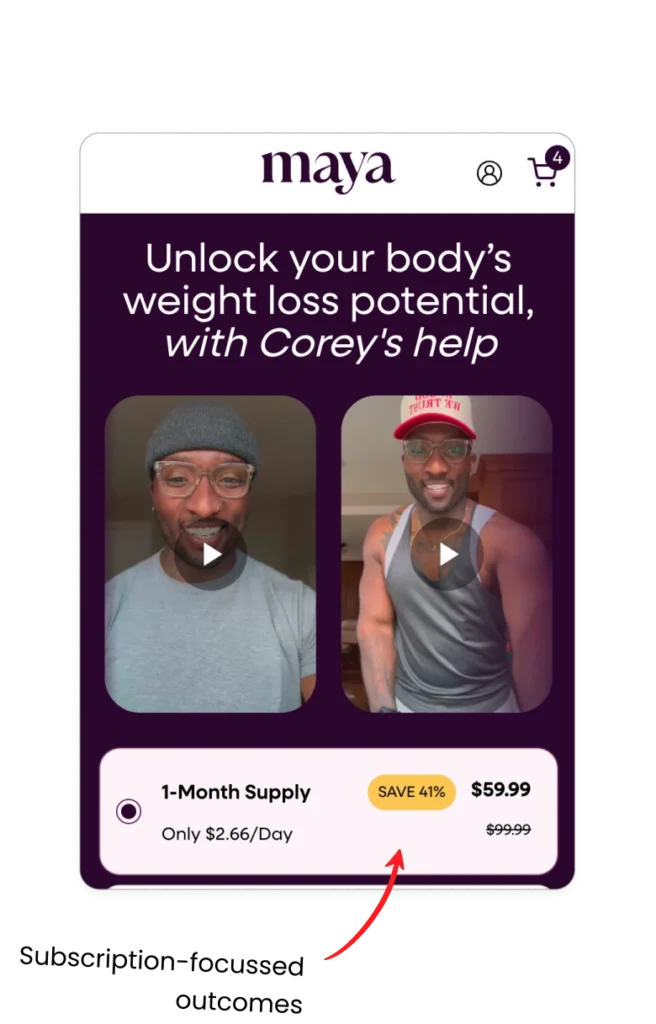
- A co-branded header with the creator’s photo and name (not a generic banner)
- A curated, hand-picked product selection (not a full-catalog dump)
- An auto-applied discount (no manual code for the shopper to remember)
- The creator’s voice in the copy (not stock product descriptions)
- Native, on-domain checkout (no jarring hand-off that breaks trust continuity)
The lowest-converting storefronts share the opposite traits — and the difference shows up directly in conversion rate.
Who should use creator storefronts?
Creator storefronts work across most DTC verticals, with the lift varying by category:
- Fashion and apparel (Cozy Earth, Crocs): high lift on both CVR and AOV — curation reduces size/style decision fatigue.
- Health and wellness (Healf): high CVR lift, especially with large catalogs where curation solves discovery.
- Beauty (Buttah Skin): high combined CRO+AOV lift — trust transfers especially well.
- Food and beverage (Electro): can become a primary revenue channel where creator authenticity carries weight.
They work less well for pure utility products with no curation value, single-SKU brands, and brands with no existing creator network to seed the program — which is exactly why pairing storefronts with an established Refersion program works so well: you already have the affiliates.
How Refersion and CreatorCommerce work together
The two layers are complementary, not overlapping:
- Refersion runs the program — affiliate recruitment and onboarding, link and code tracking, commission management, payouts, tax handling, and access to its established affiliate marketplace.
- CreatorCommerce runs the storefront — it turns each Refersion affiliate into a co-branded, on-domain storefront, built on Shopify’s native architecture (no iframes, no external hosting).
Setup is built around Shopify Flow — no API keys or custom development. Install CreatorCommerce, connect your Refersion program, configure your storefront template once, and map your Refersion creator groups to storefront tiers. From then on, each creator you add in Refersion automatically gets a co-branded storefront. The first storefront is typically live within minutes; every subsequent creator inherits the template. (See how to set up CreatorCommerce on Shopify for the step-by-step.)
Measuring creator storefront performance
Per-creator attribution is the deepest benefit. Each storefront has a unique URL, so every conversion is attributable to that creator without relying on UTMs or last-click cookies — and it lines up with the commission data in Refersion. The four metrics that matter:
- CVR vs. baseline — is the co-branded experience converting better than a generic page? (Customers see 30–214% lifts.)
- AOV vs. baseline — are shoppers buying more per order? (Cozy Earth 67%; Buttah Skin 78%.)
- Cost per acquisition — is borrowed trust cheaper than paid impressions?
- Repeat purchase rate — do storefront-acquired shoppers come back? The durability test.
Frequently asked questions
What is a creator storefront? A creator storefront is your product page personalized to a specific creator — their photo, hand-picked products, an auto-applied discount, and their copy — hosted on your own domain. It’s the destination your Refersion affiliate links point to, and it converts 30–214% better than sending that traffic to a generic page.
How is a creator storefront different from a standard affiliate landing page? A standard landing page is generic — every creator’s traffic lands on the same place, and the creator’s voice disappears at the click. A creator storefront is co-branded around the specific creator from click through checkout, preserving the trust that drove the visit.
Do creator storefronts work with my Refersion program? Yes — that’s the intended pairing. Refersion manages the affiliates, links, commissions, and payouts; CreatorCommerce turns those affiliates into co-branded storefronts on your own domain. The two run together with no overlap.
Do creator storefronts actually increase sales? Across CreatorCommerce customers, yes — 30–214% higher conversion and 67–78% higher AOV than standard affiliate links. Cozy Earth: 214% CVR lift across 600+ creators. Healf: 40.8% across 1,700+ storefronts. Buttah Skin: 30% / 78%.
How much does it cost? Refersion offers plans for programs of every size for the management layer; CreatorCommerce starts at $500/month for the storefront layer. Most brands run their Refersion program and add the storefront layer as it scales. For specifics, book a CreatorCommerce demo.