

In a hyper-competitive digital landscape, capturing a new customer is only the first step. The real battleground for modern direct-to-consumer (DTC) and consumer packaged goods (CPG) brands lies in retention and optimizing Customer Lifetime Value (LTV).
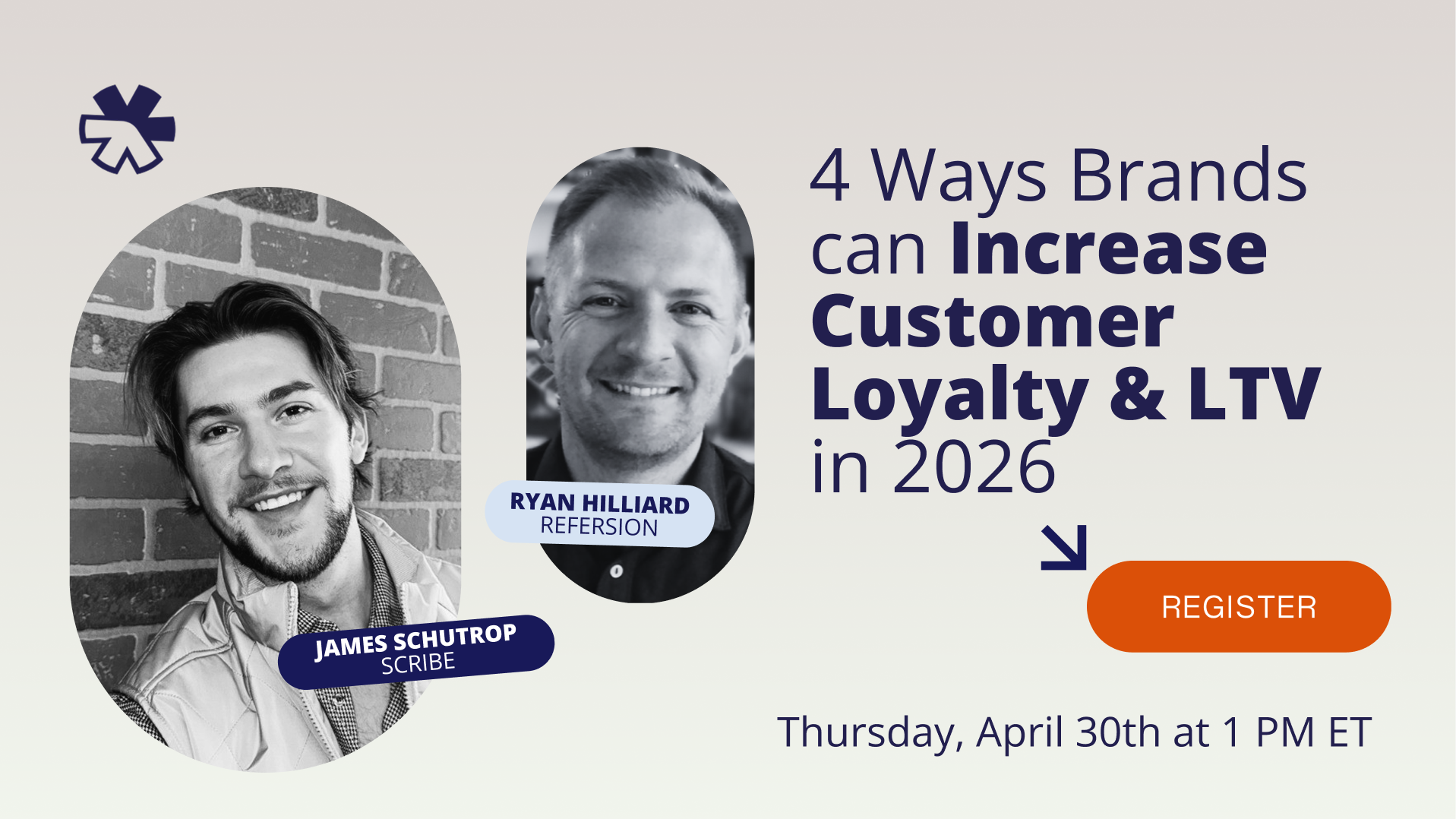
In a recent Refersion webinar, Ryan Hilliard, CEO of Refersion, sat down with James Schutrop, CEO of Scribe. Scribe is a highly automated handwritten note service provider that helps e-commerce merchants jailbreak traditional direct mail structures to deliver scalable, hyper-personalized offline “wow moments” directly into automated customer workflows.
Drawing from his background in running home service companies and multi-million dollar e-commerce sites, James broke down why the most successful massive brands operate like small mom-and-pop shops, how to structure post-purchase logic, and four tactical ways to build an unshakeable retention moat around your business.
1. Stripping the “Corporate” Out of Automated Copy
The fastest way to erode customer loyalty is to treat your buyers like a nameless line item on a financial spreadsheet [24:23]. James emphasizes that consumers don’t form deep emotional connections with corporate entities; they support real, flesh-and-blood people [12:14].
To immediately humanize your digital footprint, review every piece of post-purchase marketing material through a simple lens: strip away the corporate gloss [14:23].
- Ditch the Graphic Overhead: Try stripping out massive background logos, studio product images, and stylized PDF wrappers from your post-purchase email flows [14:23]. As soon as a user opens an email that looks like an elaborate catalog display, their brain instantly switches from reading a message to deciding whether they want to be sold [14:37].
- Write Like a Person: Re-architect your copy to sound like it was manually typed out by a real team member sitting across a keyboard or in a fulfillment warehouse [13:15].
Instead of an automated, generic cart recovery blast, write from a direct, individual perspective:
“Hey [First Name], John here from the warehouse. I noticed you took our certification class last Tuesday but didn’t finish the final sign-up. Did you hit any regional state compliance snags or have any questions I can personally clear up for you?” [12:59]
This slight shift in tonality establishes an authentic dialogue rather than a cold commercial pitch, driving dramatically higher reply and recovery actions.
2. Implementing the “Give-Give-Get” Protocol
Most loyalty programs are constructed completely backward. Brands frequently ignore active customers, only bombarding them with aggressive sales touchpoints the moment their subscription cancels or they slip into a dormant state [15:27], [15:51].
James compares this approach to a marriage in distress. If you only bring flowers home to your wife after a massive fight to salvage the relationship, the gesture feels transactional and hollow [16:20], [16:47]. True loyalty is built when you gift those flowers on a quiet Saturday morning when she least expects them [16:26].
                     THE GIVE-GIVE-GET WORKFLOW

  ┌────────────────────────────────────────────────────────┐
  │ 1. GIVE (Customer Service Touchpoint - No Pitch)       │
  └───────────────────────────┬────────────────────────────┘
                              ▼
  ┌────────────────────────────────────────────────────────┐
  │ 2. GIVE (Value-Add Education / Mix Setup Check-in)     │
  └───────────────────────────┬────────────────────────────┘
                              ▼
  ┌────────────────────────────────────────────────────────┐
  │ 3. GET (Programmatic, contextual product cross-sell)   │
  └────────────────────────────────────────────────────────┘
Before you ever ask a customer to buy again or upgrade their cart, execute a strict Give-Give-Get protocol [13:51]:
- Touchpoint 1 (Give): A pure customer service follow-up [13:57]. “Hey, your package just arrived at the door. Did everything make it safely? How does it look?” [14:05]
- Touchpoint 2 (Give): A non-promotional value-add [13:57]. “It’s been two weeks since you received the protein powder. How is it mixing up for you? Here’s a quick tip on the best blending ratio.” [14:05]
- Touchpoint 3 (Get): Once you have delivered uncompromised value, execute a contextual cross-sell or subscription invitation [13:51].
3. Deploying “Wow Factors” at the Onset of the Funnel
A common strategic error is reserving premium offline gifts—like highly customized direct mail or phone calls—strictly for your elite “hero segment” of customers who have already ordered six or seven times [15:36], [23:27].
James notes that your hero customers are already deeply loyal; they will continue to buy from you simply given time [23:39].
The primary goal of an offline “wow factor” is to stop a first-time buyer in their tracks when their perception of your brand is actively being formed [23:19], [23:44]. Capitalize on that initial post-purchase momentum to permanently transition them from a one-off transaction into a lifelong brand evangelist [17:17], [23:19].
Elite Retention Case Studies: Sweetwater & Chewy
- The Sweetwater Approach ($1B+ Music Retailer): They assign a dedicated representative to place a non-promotional, humanizing phone call to every single buyer, even if they only ordered a $10 pack of drumsticks [40:03], [40:25]. They ask if the cables are long enough for their keyboard layout or if they have setup questions [40:38]. This deliberate operational investment turns small-item hobbyists into hyper-loyal lifesters who eventually return to purchase $5,000 professional recording setups [40:56], [41:16].
- The Chewy Blueprint (Multi-Billion Dollar Pet Retailer): Chewy famously invests over $10 million a year processing automated handwritten direct mail [17:46], [17:53]. When a customer cancels a subscription due to a pet passing away, Chewy doesn’t send a robotic automated email; they ship a handwritten condolences card [42:24], [42:32]. This deep empathy cements a lifetime relationship, ensuring that when the family adopts a new pet down the road, they remain a customer for the next 10 to 20 years [42:10], [42:32].
4. Granular, Hyper-Contextual Cross-Selling
Programmatic “frequently bought together” widgets frequently fail because their automated logic isn’t actually helpful to the consumer [45:06], [45:14]. If a user just bought a premium guitar, displaying a recommendation for an equally expensive alternative guitar is completely irrelevant [45:22].
True cross-selling requires a granular, contextual understanding of the user’s exact journey [45:33]. To scale this automatically via email, SMS, or direct mail, use dynamic keyword insertions to write hyper-focused educational copy:
“Hey, looking through our fulfillment logs, I noticed this is your first time ordering with us and you grabbed our premium L-Glutamine. I wanted to drop you a quick note because stacking Glutamine alongside clean Creatine functions as a massive muscle acceleration recovery trick. Let me know if you have any questions, or you can find our Creatine link right here.” [47:27], [48:05]
Eliminating Late-Stage Shipping Friction
When attempting to cross-sell a small, highly complementary item (like a $6 pack of guitar picks to accompany a new guitar), ensure you don’t accidentally trigger late-stage cart abandonment [49:33].
If a buyer sees an extra $8 shipping fee tacked onto a $6 recommendation that takes 8 days to arrive, they will immediately pass on the offer [49:38].
The Tactical Fix: Deliver an exclusive single-use code offering free shipping on that specific accessory [49:48], [50:13]. Frame the copy contextually:
“We already rushed out your primary order to hit our 1-hour fulfillment window, so we can’t physically drop this accessory into the same box. But because we want you to have the right pairing, use this custom code to get 100% free shipping on us.” [49:56], [50:44]
This highly precise, helpful approach treats the consumer like a human while optimizing your basket size [46:28], [51:11].
Final Thoughts: Commit to the Ethos
Building an unshakeable retention moat requires moving past tracking quick monthly traffic metrics to embrace a long-term brand service ethos [28:39], [30:35].
When you track long-term control groups across tens of thousands of buyers, deploying automated, handwritten direct mail at critical post-purchase touchpoints generates a verified 11% to 27% baseline lift in overall Customer Lifetime Value (LTV) [17:30], [31:15].
Stop treating your customers like anonymous digits on a screen, build humanized communication paths into your automation flows, and deliver uncompromised value early [17:17], [24:23].
To explore direct integration setups with Shopify and review full retention frameworks, watch the complete live webinar on YouTube: 4 Ways Brands Can Increase Customer Loyalty & LTV in 2026.
