In the direct-to-consumer (DTC) and consumer packaged goods (CPG) landscape, marketing tools like affiliate tracking are heavily evaluated through a growth lens. However, driving traffic and viral interest is only half the battle. If your fulfillment backend collapses under sudden demand, the customer experience is broken before they even open the box—invalidating all your hard marketing work [01:52].
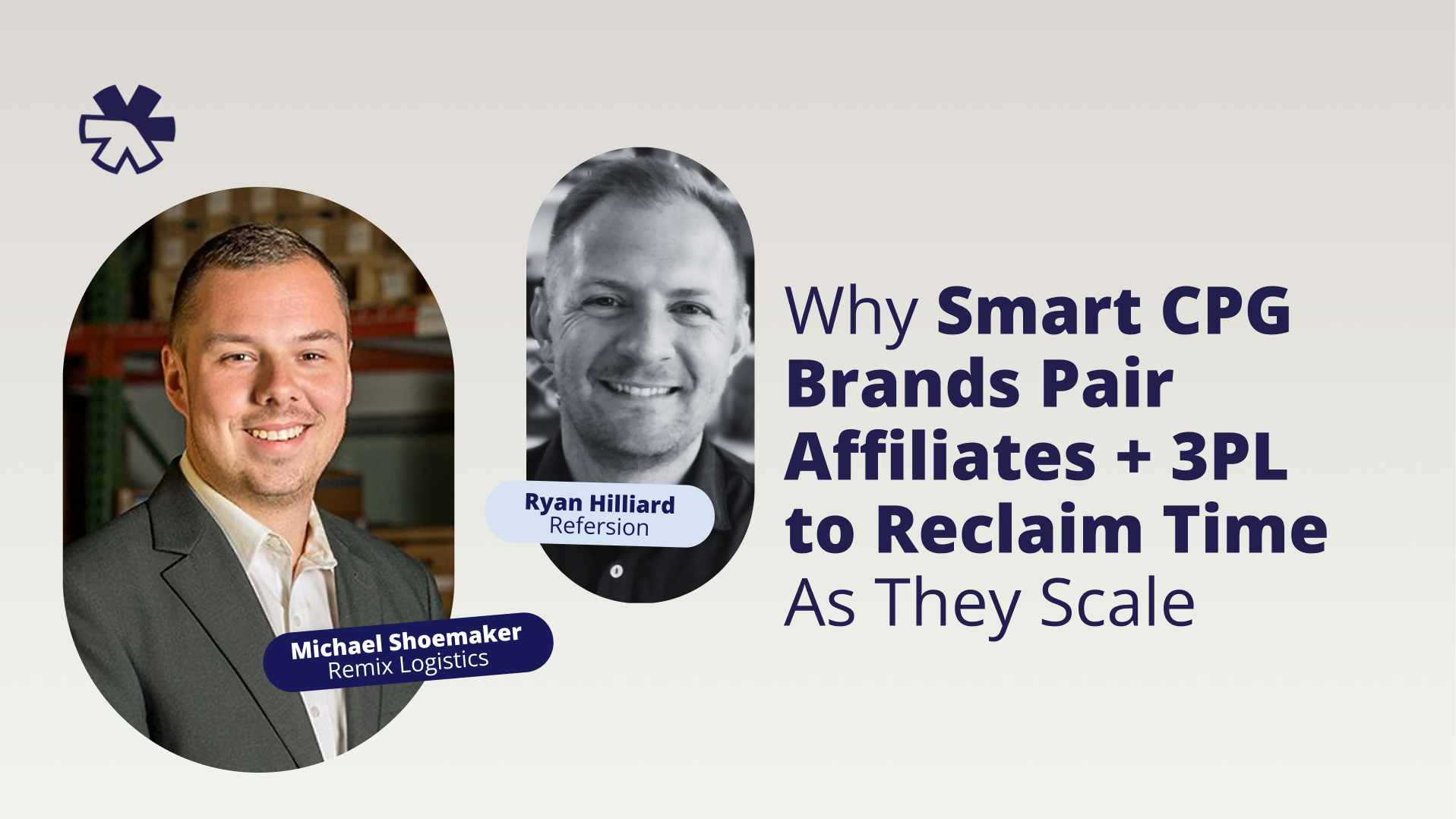
In a recent Refersion webinar, Ryan Hilliard, CEO of Refersion, was joined by Michael Shoemaker, Co-Founder and CEO of Remix Logistics. Based in Buffalo, New York, Remix Logistics is a premium third-party logistics (3PL) provider that moves far beyond transactional shipping to deliver deep operational and infrastructure support to emerging, venture-backed brands.
Mike shared his operational blueprint for when brands should transition away from self-fulfillment, how to scale dynamically, and how to systematize complex influencer and wholesale workflows.
1. Breaking Free from the Founder’s Fulfillment Burden
When a CPG brand first launches, packing the initial couple of orders in a garage or basement is incredibly exciting [07:55]. But as traction builds, the daily grind of printing labels, managing carrier chargebacks, and navigating address updates quickly transforms from a milestone into an overwhelming administrative burden [08:29].
Outsourcing to a boutique 3PL solves three critical growth challenges [06:44]:
- Reclaiming High-Value Time: Founders stop working in the business to focus on the business—diverting energy toward product research, ad creatives, and raising capital [07:08], [11:55].
- Spatial Recovery: Reclaiming office space, living rooms, and cluttered storage units by moving stock into an industrial warehousing infrastructure built for scale [09:04].
- Shipping Optimization: Accessing immediate, institutional cost savings on packaging materials and carrier rates that a standalone small business cannot secure independently [11:36].
The Magic Number: When to Outsource?
While there isn’t a single universal science, Mike advises brands that hit 10 to 12 consistent orders per day to actively begin scoping 3PL providers [11:21]. At this steady volume, the operational time savings and carrier shipping discounts fully justify the cost of third-party warehousing and receiving fees [11:28].
2. The Timeline: Giving Your Brand Room to “Date”
A major mistake seasonal brands make is attempting to rush a logistics transition right before a major shopping period [12:38].
Just like setting up an affiliate network requires a long-term content runway, switching your entire inventory stack requires a calculated buffer [13:15].
┌────────────────────────────────────────────────────────────┐
│               THE 3PL TRANSITION TIMELINE                  │
├────────────────────────────────────────────────────────────┤
│ 1 TO 2 MONTH runway REQUIRED                               │
│ • Scope multiple partners for culture & fit                │
│ • Understand operational nuances & fee schedules           │
│ • Time to "date" the partner before long-term commitment   │
├────────────────────────────────────────────────────────────┤
│ 2 WEEK TYPICAL ONBOARDING                                  │
│ • Heavy API integration with tech stack                    │
│ • Sync real-time inventory tracking with Shopify           │
└────────────────────────────────────────────────────────────┘
Mike emphasizes that a reliable operating partner must feature seamless, uniform API technology [14:32]. Synching your store data should be an immediate plug-and-play process; if a logistics provider struggles with modern digital integrations, treat it as a red flag and walk away [14:40], [14:47].
3. Smart Logistics: Bifurcating by Channel and Geography
Transitioning to a 3PL doesn’t have to be a rigid, all-or-nothing corporate decision where you surrender your entire catalog all at once [18:23], [20:51]. Smart omni-channel brands frequently slice and dice their logistics strategy across multiple axes:
- Geographic Bifurcation: If your manufacturing center or port of entry is on the East Coast but your team lives on the West Coast, utilize an East Coast warehouse to fulfill orders rapidly to the high-density Northeast population, optimizing speed and cutting transit costs [19:25].
- Sales Channel Bifurcation: Separate your direct DTC Shopify store from your wholesale engine [19:45]. For example, a 3PL can be brought on specifically to handle complex Fulfillment by Amazon (FBA) prep—keeping Amazon continuously stocked while you retain individual control over smaller, custom sales channels [20:01].
Navigating the 40-Page Retail SOP
As emerging brands mature, they often transition from drop-shipping to major national brick-and-mortar retailers [22:40].
Retail distribution centers (DCs) are notoriously ruthless, dictating compliance via meticulous 40-page standard operating procedures (SOPs) [23:20]. They explicitly mandate everything from label placement accuracy to pallet stacking configurations, wrap thickness, and wood quality [23:27].
Failing to meet these strict terms results in massive corporate chargebacks and broken wholesale accounts [23:51]. Pairing with a proactive 3PL that synthesizes this technical compliance data ensures your large-scale inventory transfers arrive flawlessly [23:51].
4. Systematizing the Influencer and Seeding Experience
When a brand manages an influx of custom product requests from top-tier affiliates or runs a large-scale product seeding campaign, they often hesitate to hand it over to a third party, worrying the premium unboxing presentation will be lost [24:41], [28:18].
While manual entry through a 24/7 web-based portal works for small, sporadic gifting [25:55], scaling an evergreen program requires systematizing the workflow [26:28].
                  THE SYSTEMATIZED SEEDING FLOW

  ┌────────────────────────────────────────────────────────┐
  │ 1. ORDER INGESTION (Influencer orders go into Shopify) │
  └───────────────────────────┬────────────────────────────┘
                              ▼
  ┌────────────────────────────────────────────────────────┐
  │ 2. METICULOUS TAGGING (Order is auto-flagged via tags) │
  └───────────────────────────┬────────────────────────────┘
                              ▼
  ┌────────────────────────────────────────────────────────┐
  │ 3. BESPOKE UNBOXING (3PL pulls custom inserts & boxes) │
  └────────────────────────────────────────────────────────┘
By filtering influencer requests directly into your central Shopify record of truth, you can apply distinct order tags [26:47], [27:04].
When the 3PL system reads a custom tag, it automatically triggers a specialized packing SOP—pulling bespoke promotional inserts, placing products in high-end presentation configurations, and utilizing branded box materials [27:13]. This automation preserves the premium “wow factor” for creators without requiring minute-to-minute monitoring from the founder [27:38], [30:06].
5. Managing the “Viral Spike”: Planned vs. Surprise Spikes
The ultimate goal of combining influencer marketing with digital ads is to achieve high-velocity scale or catch a wave of virality [33:55]. Mike breaks down how to manage inventory safety buffers across both predictable and sudden demand spikes:
The Planned Wave (Kickstarter / Product Drops)
When a launch is pre-planned, utilize advanced demand forecasting metrics to establish an unshakeable safety stock [34:09].
- The Rule of Safety Stock: Minimally maintain 30 to 60 days of trailing sales volume as an untouched safety cushion [34:49].
- Calculate the Buffer: Always look closely at manufacturing lead times relative to your current on-hand quantities [35:12]. If it takes four weeks to manufacture an item but your stock levels only cover six weeks of velocity, a sudden viral lift during that window will completely deplete your inventory, driving you straight into a painful backstock deficit [35:19].
The Surprise Wave (Sudden Celebrity / Viral Endorsement)
If a high-profile user wears or tags your product out of nowhere, immediate transparent communication with your customer base is paramount [35:43].
Sync with your manufacturing facility and 3PL to establish a realistic operational timeline to clear the backlog [36:25]. Then, proactively update your checkout landing pages and send transparent automated updates to buyers [36:32]. Frame the delay as an exciting celebration of brand success, set an accurate delivery window (e.g., “shipping within two weeks”), and retain their long-term loyalty by selectively bundling store credits, post-purchase discounts, or complementary shipping upgrades [36:41], [37:14].
Final Thoughts: Proactive Partners Drive Growth
Your fulfillment team shouldn’t simply react to boxes as they slide down a conveyor belt [29:35]. The most profitable brand-3PL relationships operate as true, proactive extensions of your internal corporate team [29:42]. Look for an operating partner that regularly comes to the table with strategic suggestions, packaging optimization ideas, and cost-saving structures so your physical infrastructure perfectly keeps pace with your digital growth [30:47].
To watch the complete live masterclass and learn more about optimizing your shipping metrics, check out the full session on YouTube: Why Smart CPG Brands Pair Affiliates + 3PL to Reclaim Time As They Scale.